
Waking up to a tiny rust-colored smear near your pillow can send your mind sprinting straight to bed bugs. The good news is that signs of bed bugs are more concrete than most people think, and bites alone do not get the final say. If you want a calm, room-by-room way to check what is real and what is just fear talking, this checklist will get you there.
Here’s the short version: bed bugs are small, flat, reddish-brown insects that hide close to where you sleep or rest, then come out mostly at night to feed. You confirm them by finding the bugs or their physical traces, such as dark spots, shed skins, eggs or blood smears, not by guessing from skin bumps alone.
What you’ll learn in this guide:
- what bed bugs look like
- the strongest evidence to look for
- where to inspect first
- how to check without missing easy clues
- how to tell early signs from a larger problem
- what to do if you find evidence
Start With the Strongest Clue: Bed Bug Evidence Beats Guesswork
If your first clue is itchy skin, that makes sense. In fact, 92% of pest professionals say bites are the complaint they hear most often. But bites are a starting point, not proof.
The strongest clue is physical evidence. A live bug near the bed, pepper-like dark spotting on fabric, pale shed skins tucked into a mattress seam, or tiny eggs stuck near a hiding place all carry much more weight than a rash ever will. That is why a proper check starts with your eyes and a flashlight, not with internet image searches at 2 a.m.
Think of this like a smoke alarm in your house. Bites are the alarm. Evidence is the smoke. You need the second part before you decide what is really happening.
What Bed Bugs Look Like
A lot of false alarms happen because bed bugs are easy to confuse with other small pests. Lint, flea dirt, carpet beetle larvae, ticks and even bits of seed hull can all look suspicious when you are already on edge.
A clear ID matters because treating the wrong pest wastes time and can spread the problem if bed bugs are present. That is one reason so many cases start with misidentification. 84% of pest pros say people often call about some other pest first.
Adult bed bugs
Adult bed bugs are flat, oval and reddish-brown. Picture an apple seed, but thinner, with visible legs. Most adults are about 5 to 7 mm long, which is big enough to see without squinting if one is out in the open.
Before feeding, the body looks flatter and more compact. After feeding, it becomes puffier, longer and darker red. That shape change throws people off because a recently fed bug looks different from one that has been hiding for days.
Young bed bugs, eggs and shed skins
Young bed bugs, called nymphs, look like smaller versions of adults. The big difference is color. They are much paler, sometimes almost translucent, especially before feeding.
Eggs are tiny, whitish and about 1 mm long. That means they look like little grains or specks glued into place. Shed skins are the empty outer shells nymphs leave behind as they grow. These look pale tan or light yellow and often collect in the same hiding spots where the bugs spend the day.
Common look-alikes that throw people off
Fleas are narrower, darker and built for jumping. If the bug launches itself, it is not a bed bug.
Ticks are rounder and more compact, with a different body shape and a tougher, seed-like look.
Baby roaches usually have longer antennae and a more elongated body. Carpet beetles are often mistaken for bed bugs in larval form, but the larvae look fuzzy or bristly, not flat and smooth.
If you are stuck comparing mystery bugs with online photos, it helps to read a more focused guide on what kind of evidence matters before buying sprays or tossing bedding.
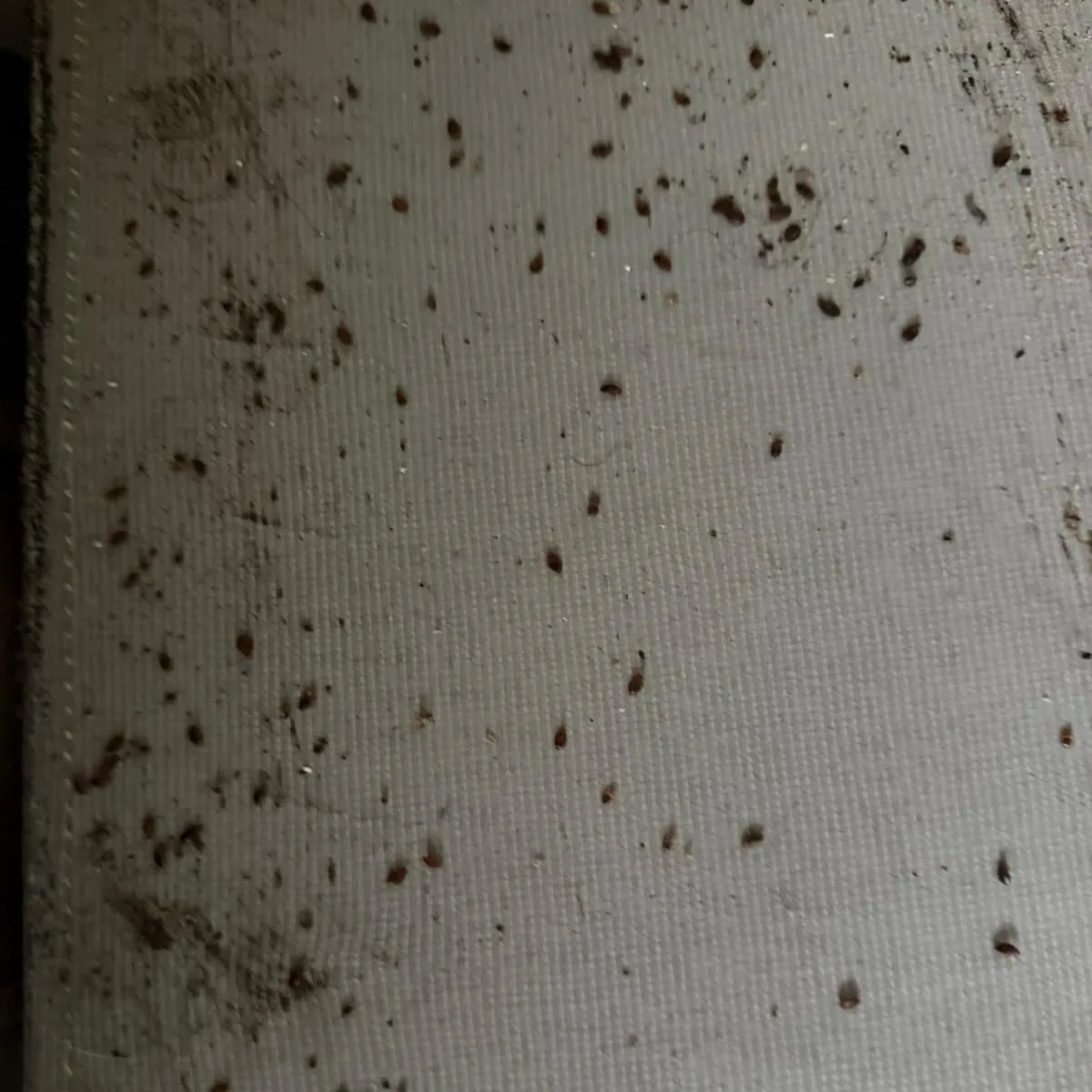
The Main Signs of Bed Bugs in Your Home
This is the real checklist. Some signs are strong proof. Some are supporting clues. The order matters.
Live bed bugs
A live bed bug inside your home, especially near a bed, couch or recliner, is a big deal. Bed bugs do not wander around for fun. If you see one in a sleeping or resting area, treat that as a serious sign right away.
Even one visible bug can mean more are hidden nearby. Bed bugs are skilled at squeezing into tiny crevices and can stay hidden for long stretches, which is part of why infestations grow quietly.
Dark fecal spots
These spots are one of the most common and useful clues. Bed bug fecal spots look like tiny black or very dark brown dots, almost like someone touched the fabric with the tip of a marker. On sheets and other fabric, marker-like spots may bleed a little into the material.
Check sheets, mattress seams, box springs, wood joints and upholstered furniture. When you find several clustered in a hiding area, that is strong evidence.
Rusty or reddish blood smears
Small rusty or reddish smears on sheets, pillowcases or mattresses can happen when a recently fed bug gets crushed during sleep. These marks are not always dramatic. Sometimes they are just faint streaks or tiny smudges.
On their own, blood marks are not enough to confirm bed bugs. Paired with dark spotting or shed skins, though, the picture gets much clearer.
Shed skins and shells
Bed bugs grow by molting, which means they leave behind empty skins. These casings are dry, pale and bug-shaped, often stuck in seams, corners and cracks.
Finding one shed skin does not always mean a large infestation. Finding several in the same area usually means active growth nearby.
Tiny eggs and eggshells
Eggs are easy to miss because they are so small and pale. Bed bugs often glue them into protected spots, such as mattress piping, box spring folds, headboard cracks or the rough edge of unfinished wood.
If you spot tiny pearly specks grouped near fecal spots or shed skins, pay attention. Eggs mean active reproduction, not just a stray hitchhiker.
A musty, sweet odor in heavier infestations
Some infestations produce a strange sweet, musty or buggy smell. This is usually a later sign, not an early one. Odor can support what you are already seeing, but it should not be your first clue because lighter infestations often have no obvious smell at all.
Why Bites Can Point You in the Right Direction but Can’t Prove It
Most people notice skin symptoms before anything else. That is normal. It is also where confusion starts.
Bites matter because they can push you to inspect sooner. But if you are trying to answer the question do you have bed bugs, skin marks alone are not enough. Mosquitoes, fleas, contact irritation, heat rash and allergic reactions can all muddy the picture.
What bed bug bites tend to look like
Bed bug bites often show up as itchy red welts or bumps on exposed skin while you sleep. Arms, shoulders, neck, face, hands and lower legs are common spots.
You may see bites in clusters or in a loose line. That classic line pattern is often nicknamed “breakfast, lunch and dinner.” It is a useful clue, but not a guarantee.
Why some people react late or not at all
Skin reactions vary wildly. Some people react within hours. Some take days. Some never show obvious marks at all. Research suggests about 30% of people may not react even when bitten repeatedly.
That is why one person in your home may be miserable and itchy while another has no visible marks. It does not mean one person is imagining it. It means skin is unreliable evidence.
Other causes that can look the same
Mosquito bites can look nearly identical. Flea bites often hit ankles and lower legs. Laundry detergent, fabric softener, rough sheets, eczema and hives can all mimic insect bites.
If all you have are bumps, keep looking. A more specific guide on telling these bites apart fast can help, but the deciding factor is still physical evidence in the room.
Where to Check First: The High-Probability Hiding Spots
Bed bugs usually stay close to where you sleep or rest, especially early on. In fact, about 85% are found in or near the bed. That makes your inspection much more manageable than a whole-house panic search.
Mattress seams, piping and tags
Start with the mattress edges. Run a flashlight slowly along seams, piping, tufts, labels and corner folds. These are protected, tight spaces, which bed bugs love.
Use your fingers or a dull card to gently open the seam just enough to look inside. No need to rip anything apart. Slow and close beats aggressive every time.
Box spring, bed frame and headboard
The underside of the box spring is a favorite hiding place. Check the fabric edge, stapled areas and corners. Look into joints on metal frames, cracks in wood, screw holes and slats.
Headboards deserve extra attention, especially the back side and where the headboard meets the wall. Bed bugs often settle there early because it is dark, still and close to your sleeping position.
Sheets, pillowcases and blankets
Bedding may show the easiest clues first: blood smears, dark spots or the occasional crushed bug. Strip the bed carefully and inspect, especially along folds and around pillow edges.
This is one place where evidence can show up before you ever see a living bug.
Couches, recliners and upholstered chairs
If you nap on the couch, work from a recliner or spend long evenings in one chair, check those spots too. Bed bugs do not care whether a piece of furniture is called a bed. They care that you stay still there.
Inspect under cushions, along seams, under the skirt fabric, beneath the frame and around staple lines.
Nightstands, baseboards and nearby cracks
Once the bed area is checked, move outward a few feet. Look at drawer joints, underside corners, baseboard gaps, carpet edges and cracks in nearby walls.
Bed bugs can hide in spaces as thin as a credit card edge. That sounds dramatic, but it really just means quick surface scans miss a lot.
How to Do a Bed Bug Inspection Without Missing the Easy Stuff
A calm inspection works better than frantic cleaning. If you start hauling bedding through the house or flipping furniture too fast, you can spread bugs and lose evidence.
Grab a flashlight, gloves and a card or dull edge
You do not need fancy equipment. A flashlight is the main tool. Gloves help if you are squeamish. A plastic card or other dull edge helps open seams. Clear tape or a small sealed container is useful if you need to save a sample, and your phone helps with close-up photos.
If you want a more detailed walkthrough later, this guide to checking carefully without making a mess of it goes deeper on the process.
Start at the bed and work outward
Begin with bedding, then the mattress, then the box spring, then the frame and headboard. After that, inspect the nightstand, nearby cracks and any upholstered furniture in the room.
That order matters because bed bugs usually stay closest to the host first. Start with the highest-probability zone before moving farther out.
Check seams, folds, screw holes and hidden edges
Bed bugs hide where pressure, darkness and tight contact make them feel sheltered. That means seams, folds, screw holes, joints, stapled fabric, cracks and unfinished wood edges.
A quick glance across flat surfaces will miss most of that. Slow down and inspect edges the way you would check a zipper for a missing tooth.
Capture or photograph anything suspicious
If you find something suspicious, save it. A piece of clear tape over a bug, an eggshell in a small sealed container, or a sharp close-up photo can help with identification.
That step saves a lot of guesswork later. It also gives a pest professional something real to confirm.
Room-by-Room Bed Bug Evidence Checklist
This is the practical center of the article. Use it like a sweep, not like a scavenger hunt.
Bedroom checklist
Check mattress seams, piping, tags, tufting and corners. Check the underside and edges of the box spring. Inspect bed frame joints, slats, screw holes and the back and mounting points of the headboard. Look over sheets, pillowcases, blankets, bed skirts, curtains near the bed, baseboards, outlets and cracks within a few feet of the bed.
If you keep under-bed bins, shoes, extra linens or stacks of clothes there, inspect those too. Bed bugs like quiet, undisturbed hiding spots.
Living room checklist
Inspect couch seams, cushion zippers, underside fabric, stapled dust covers, recliner joints, throw blankets and the frame underneath. Pay attention to spots where your body rests for long stretches, like the crease where your back meets the cushion.
Also check side tables, baseboards and carpet edges near that furniture. If you are dealing with bites but no visible bugs yet, the living room is one of the easiest places to overlook.
Guest room and kids’ room checklist
Less-used rooms are not automatically safe. A guest room can pick up bed bugs after a visitor, travel bag or secondhand furniture delivery. Kids’ rooms can get exposure from sleepovers, shared gear, backpacks and hand-me-down items.
Check the bed first, then stuffed furniture, curtain hems, bed frames, toy bins near the bed, and any fabric storage close to where someone sleeps.
Luggage, laundry and clutter zones
Suitcases, duffel bags, laundry baskets, backpacks, purses and piles of clothing can all hide or carry bed bugs. Inspect seams, pockets, lining folds and hard-shell edges.
Clutter is not the cause of bed bugs, but it gives them more places to hide. The catch is that clutter also makes inspection harder, which is why careful bagging and sorting matter once you find evidence.
Early Signs vs. Signs of a Larger Infestation
Not every case is at the same stage. Knowing the difference helps you judge urgency without spiraling.
What early bed bug signs often look like
Early on, evidence is usually limited and concentrated. You might find a few small fecal spots near one mattress seam, one shed skin near the headboard, or a single live bug near a sleeping area.
The activity often stays close to one bed or one favorite chair. You may have suspicious bites, but the physical traces are still sparse and easy to miss.
What a more established infestation looks like
A larger infestation leaves a louder trail. You may find more spotting, multiple shed skins, visible eggs and bugs hiding in more than one part of the room. The signs also spread farther from the bed, into couches, baseboards, nightstands, adjacent rooms and wall cracks.
At that point, an odd sweet or musty odor may start to show up too. If bugs are turning up in several rooms, the problem has moved beyond a simple one-spot check.
How Bed Bugs Usually Get Into a Home
This part matters because bed bugs are not a cleanliness issue. That myth wastes time and adds shame that does not belong here.
Bed bugs are hitchhikers. They get from place to place by clinging to items, furniture and personal belongings, then settling in when they find a good hiding spot near a resting human.
Travel and overnight stays
Hotels, vacation rentals, overnight work trips and visits with friends or family are common entry points. A suitcase set on an infested luggage rack or near an infested headboard can pick up a hitchhiker fast.
That is why checking mattress seams before unpacking is such a smart habit.
Used furniture and secondhand items
Secondhand mattresses, couches, bed frames, upholstered chairs and even nightstands can bring bed bugs home. The risk is highest with anything fabric-covered or full of cracks and joints.
A great deal on a couch stops feeling like a deal pretty quickly when the hidden cost starts showing up on your sheets.
Shared walls and multi-unit housing
Apartments, condos, dorms and connected townhomes can allow bed bugs to move through wall voids, baseboard gaps and shared infrastructure. That does not mean every neighbor issue becomes your issue, but it does mean a home can be careful and still get exposure.
Visitors, backpacks and everyday hitchhiking
Backpacks, coats, purses, school bags, public transit and overnight guests can occasionally bring bed bugs in. No blame needed. That is just how hitchhiking pests behave.
What to Do If You Find Signs of Bed Bugs
Fast, calm action beats random spraying every time. If you have enough evidence to suspect bed bugs, the goal is to contain the problem and preserve useful information.
Don’t move infested items through the house
Avoid dragging bedding, cushions, bags or furniture from room to room. Moving items loosely can spread bed bugs into hallways, laundry areas or other bedrooms.
Keep suspect items where you found them until they are bagged or professionally assessed.
Bag linens and washable fabrics right away
Seal sheets, blankets, pillowcases and washable clothing in bags. Then wash and dry them on high heat if the care label allows it. Heat is one of the few simple home steps that helps.
Bag first, then carry. Not the other way around.
Avoid bug bombs and random sprays
Foggers and bug bombs usually miss the hiding spots that matter most. Worse, they can scatter bed bugs deeper into walls and furniture, making the problem harder to control.
One spray does not fix bed bugs. If you want treatment guidance from a specialist, professional bed bug treatment is a far better starting point than random products from a hardware shelf.
Reduce hiding places without scattering bugs
Careful decluttering helps, but do it in a controlled way. Bag loose fabric items. Keep piles off the floor. Move furniture slightly away from walls if needed for inspection. Avoid throwing everything around in a panic.
The trick is to reduce hiding places while keeping the evidence traceable.
Call a pest professional when the evidence is clear
If you have found live bugs, eggs, repeated spotting or signs in more than one room, professional help makes sense. Bed bugs are hard to eliminate because eggs survive what many quick treatments miss, and hidden harborages are easy to overlook.
If cost is part of the decision, it helps to understand what an inspection usually includes and costs before you book.

Signs the Problem Is Getting Worse
One suspicious stain can leave you unsure. A pattern is different. When evidence starts repeating itself across time or across rooms, the odds of an active infestation go up fast.
More signs showing up in more than one room
If you first notice dark spots on the bed, then later find similar spotting on a couch or chair in another room, that can mean the infestation is spreading. The same goes for shed skins or live bugs showing up on more than one piece of furniture.
Bed bugs can disperse surprisingly well once established. That is why early action matters so much.
New bites plus new physical evidence
The most convincing pattern is new itchy marks paired with physical clues in the room. Bites by themselves are uncertain. Bites plus dark spotting, shed skins, eggs or a live bug tell a much stronger story.
At that point, waiting usually makes the job harder. Bed bugs can survive for months without feeding, so a short quiet period does not mean the problem is gone.
Why bed bugs can seem to disappear during the day
Bed bugs are nocturnal and good at hiding. During daylight hours, a room can look perfectly normal even when bugs are tucked into seams, frame joints and wall gaps a few feet away from the bed.
That is why false reassurance is so common. No bugs on the pillow does not mean no bugs in the room. It only means the bugs are doing exactly what bed bugs do, staying hidden until nighttime.
When Bites Need Medical Attention
Most bites are uncomfortable, not dangerous. Still, sometimes the skin reaction needs more than home care.
Typical home care for itchy bites
Wash the area gently with soap and water. Try not to scratch, even though that is easier said than done at midnight. Common anti-itch products can help calm irritation.
If you want a closer look at how bites tend to appear, a guide to common bite patterns and skin reactions can be useful.
Signs it’s time to contact a doctor
Get medical advice if you have severe swelling, signs of infection, spreading redness, fever, trouble breathing or a reaction that is getting worse instead of better. The skin problem and the pest problem are related, but they are not the same job.
Signs That It May Not Be Bed Bugs After All
Relief is part of the job here too. A lot of suspected bed bug cases are not bed bugs. In a 2025 survey, pest professionals said false alarms are common, and many “bed bug” calls turn out to be other pests or harmless debris.
Carpet beetles, fleas and other common mix-ups
Carpet beetles are a classic confusion point. The larvae are small and bristly, and the shed larval skins can look alarming on window sills, along baseboards or near fabrics. But carpet beetles feed on natural fibers and debris, not blood.
Fleas jump. That matters. If the tiny bug you saw launched itself off the sheet, you are probably not dealing with bed bugs. Cockroach evidence tends to look different too, with larger droppings, egg cases or roach-shaped nymphs that do not resemble an apple seed.
Random stains, lint and harmless debris
Black fabric pills from sheets, tiny crumb-like specks from snacks, mascara flakes, old blood spots, mattress wear and plain dust all cause unnecessary panic. A single black dot on a white fitted sheet is not strong evidence by itself.
What makes evidence persuasive is pattern plus placement. Multiple signs in seams, cracks and nearby resting areas tell a different story than one speck in the middle of the bed.
A single bug after travel vs. a home infestation
A single bug found on luggage, a hoodie or the edge of a duffel bag after a trip may be an introduction, not an established infestation. That still deserves caution, but it is different from finding multiple life stages, repeated spotting or eggs in your bed setup.
UF/IFAS notes that an infestation usually means more than one bed bug is present, with at least two life stages represented. That distinction matters because it keeps you from treating every hitchhiker like a full-blown household takeover.
Strong Evidence vs. Weak Clues
When you are inspecting, a short checklist helps more than scrolling through twenty photos online while standing in the dark.
Strong evidence
Strong evidence includes live bugs, multiple fecal spots, shed skins, eggs, eggshells and a saved specimen that can be identified. If you have more than one of these in the same area, the odds tilt hard toward a real problem.
Suspicious but not conclusive
Suspicious clues include bites, blood spots on sheets and a musty sweet odor in the bedroom. These deserve follow-up, but they need physical backup. On their own, they are not enough.
Low-likelihood signs
Low-likelihood signs include a single unexplained welt, one random black speck, loose debris, seed-like crumbs, lint or mattress wear with no other bug-shaped evidence nearby. These are the clues most likely to send you into a panic for no good reason.
Signs That Mean You Should Act Now
Some signs are annoying. Some signs mean the problem is getting established. Knowing the difference can save you weeks of stress.
You’re Finding Signs in More Than One Room
Multiple rooms usually means the problem is no longer small. If evidence shows up in the main bedroom and the guest room, or on the couch and in the bedroom, that points to spread rather than a one-time hitchhiker.
In attached housing, that matters even more. Bed bugs can move through wall voids, shared structures and carried belongings. Once the signs are in more than one area, it is time to think bigger than spot treatment.
You Keep Seeing New Spots, Skins or Bites Week After Week
Fresh evidence over time is the real issue. One old stain is ambiguous. New dark spots on clean bedding, a new shed skin under the same bed leg, or repeated bites after laundering and cleaning suggest active bed bug activity.
That pattern matters more than any single clue. Repetition means the issue is current.
You Live in an Apartment, Condo or Attached Home
In multi-unit housing, speed matters more. Bed bugs can move between units, and delay makes coordination harder. If you live in an apartment, duplex, condo or townhouse, signs should prompt quick reporting and professional evaluation.
This is not about blame. It is about containment.
Sleep Loss, Stress and Constant Checking Are Taking Over
Bed bugs get into your head fast. You start checking the sheets every morning. You feel every little itch at night. You stop relaxing on the couch. Sleep gets lighter, shorter and more tense.
That stress is real. One housing survey found meaningful links between exposure and trouble sleeping, along with higher anxiety and depression screening rates. If the mental toll is ramping up, that is already enough reason to stop trying to tough it out alone.
When to Call for Bed Bug Heat Treatment
Call when signs are confirmed and the problem looks active, persistent or spread beyond one tiny area. Waiting usually costs more in time, stress and money.
Heat treatment comes up so often because it addresses a big weakness in DIY control: you cannot realistically chase bed bugs one by one through every crack, seam, cushion and screw hole.
Clear Signs It’s Time to Call for Heat
If you have found live bugs more than once, it is time. If you see dark spots, skins or eggs in several places, it is time. If signs keep showing up after laundering, vacuuming and cleanup, it is time. If the problem has spread to couches, recliners, multiple bedrooms or followed travel or used furniture into the house, it is definitely time.
This is also the point to start comparing options. A practical guide on when professional help makes sense can help you stop spinning your wheels.
Why Heat Treatment Appeals to So Many Homeowners
Professional heat treatment raises room temperatures high enough to kill bed bugs across life stages, including bugs hiding in cracks, fabrics and furniture. Instead of chasing visible insects like you are swatting flies one at a time, heat treats the whole problem zone more like an oven.
That whole-room approach is exactly why many homeowners prefer it. It can reach places sprays miss, and it targets adults, nymphs and eggs when done correctly. If you want a plain-English overview of how whole-home thermal treatment works, that page breaks down the process.
What Heat Can and Can’t Do
Heat is powerful, but it is not magic. Success depends on reaching lethal temperatures everywhere bed bugs are hiding, not just in the middle of the room. Eggs are tougher than adults, which is why professional monitoring matters so much. Research on egg heat resistance found that eggs can survive longer than adults at lower temperatures, and treatment works best when all hiding spots get hot enough for long enough.
That means clutter, insulated items, packed storage and missed cool zones can reduce effectiveness. This is also why comparing heat, chemical treatment or a mix makes sense when the infestation is larger or the layout is complicated.
Bed Bug Myths That Waste Time
Bad assumptions make bed bug situations worse. A few myths show up over and over.
“Bed bugs only show up in dirty homes”
False. Bed bugs can show up in clean homes, tidy apartments, luxury hotels, offices, dorms and cars. Dirt does not create bed bugs.
Clutter can make them harder to spot and treat, but it is not the cause.
“If you don’t have bites, you don’t have bed bugs”
Also false. Some people do not react at all, or react days later. No bites does not clear the room.
“You would definitely see them crawling around”
Usually not. Bed bugs are good at hiding and mostly come out at night. That is why spotting, eggs and shed skins often appear before you ever see a live bug.
“One spray fixes the problem”
No chance. Bed bugs are stubborn because they hide deeply, spread easily and lay eggs that one casual treatment often misses. A one-and-done approach is how small infestations become bigger ones.
A Simple Next Step if You’re Not Sure Yet
If you are still unsure, do one thing tonight: inspect your mattress seams, box spring edges and the back of your headboard with a flashlight. Go slowly. Look for dark dots, pale shed skins, tiny white eggs and anything apple-seed sized.
If you find anything suspicious, bag or tape the sample and take a clear photo before cleaning. That one small step turns panic into evidence, and evidence is what gets you to the right fix.
Found Signs of Bed Bugs in Richmond?
If you found evidence on this checklist, the next step is confirming how far it has spread. We inspect homes and rentals across Richmond and Central Virginia, usually within a day of your call, and explain your treatment options before any work begins.
Frequently Asked Questions
Can you have bed bugs if you only see bites?
Yes, but bites alone do not confirm bed bugs. Skin reactions can come from mosquitoes, fleas, irritation or allergies. You need physical signs such as bugs, dark spotting, eggs or shed skins to be confident.
What is usually the first visible sign of bed bugs?
For many homes, the first visible clue is dark fecal spotting on sheets, mattress seams or nearby furniture. Bites are often noticed first, but visible spotting is more useful for confirmation.
How small are bed bug eggs?
Bed bug eggs are about 1 mm long. That makes them tiny, pale and easy to miss unless you look closely with good light.
Do bed bugs only stay in the bedroom?
No. Bedrooms are the most common starting point, but bed bugs also hide in couches, recliners, upholstered chairs, baseboards, luggage and nearby cracks, especially as an infestation grows.
Is a musty smell a reliable way to detect bed bugs?
Not really. A sweet or musty odor can happen in heavier infestations, but early infestations often have no noticeable smell. Use odor as a supporting clue, not as your main test.
If you find one bed bug, does that mean there are more?
Often, yes. One visible bug near a sleeping or resting area usually means you should inspect carefully for more evidence nearby. Bed bugs are good at staying hidden, so one sighting rarely tells the whole story.