
Bed bug signs are the physical clues bed bugs leave behind, and if you spotted a tiny blood smear on your sheet at 2 a.m., your concern is not overblown. Here’s the straight answer: bites alone are not enough to confirm bed bugs, but spots, skins, eggs, or a live bug mean you should stop guessing and act quickly.
Bed Bug Signs: What Counts as a Real Warning Sign
A real warning sign is not just waking up itchy. Bed bug signs are the visible traces of actual activity: dark fecal spots, rusty blood smears, shed skins, eggs or eggshells, and live bugs hiding near places you sleep or lounge. Those are the clues that turn suspicion into something much more concrete.
That distinction matters because skin reactions are messy. A mosquito bite, dry skin, hives, or a random irritation can send your mind racing. But physical evidence is different. In fact, four key signs repeatedly show up in bed bug inspections: dark spots, shed skins, eggshells, and live bugs.
So if all you have is a rash, stay calm and inspect. If you have actual evidence on the mattress seam, under a couch cushion, or along the headboard, treat it like a real problem now, not a vague possibility.
Why Bed Bugs Are So Easy to Miss at First
Bed bugs are good at one thing above all else: staying hidden until the problem is no longer small. Early infestations often go unnoticed because the bugs squeeze into tiny cracks, feed mostly at night, and leave behind signs that are easy to mistake for lint, dirt, or old fabric marks.
The catch is that bed bugs do not need much space. If a crack can hold a credit card, it can hide a bed bug. Add the fact that these insects can survive for months without feeding, and you get a pest that can quietly hang around long after a trip, an overnight guest, or a used furniture pickup.
That is why little clues matter. One tiny black dot near mattress piping may not look dramatic, but early detection is usually the cheapest and least stressful moment to deal with the problem. The EPA specifically notes that finding bed bugs before they spread is the most cost-effective point to act.
What Bed Bugs Look Like in Plain English
Adult bed bugs are about the size of an apple seed, usually around 3/16 to 1/4 inch long. The body is flat, oval, reddish-brown, and wingless. If one has not fed recently, it looks thinner and flatter. After feeding, it looks puffier and darker.
Younger bed bugs, called nymphs, are much smaller and lighter. Think pale tan to almost see-through, like a tiny sesame-seed-sized speck with legs. That makes them much easier to miss on light fabric or unfinished wood.
Eggs are even smaller. Tiny, white to pale yellow, and about 1 millimeter long. More like a grain of salt than anything dramatic.
Where Bed Bugs Usually Hide
Bed bugs usually stay close to where you rest. Start with mattress seams, tags, piping, and folds. Then check the box spring, bed frame joints, screw holes, headboard, and nearby furniture like nightstands and dressers.
But the bed is not the only hotspot. Couches, recliners, and upholstered chairs are common hiding places, especially if you nap there or spend a few hours in the same spot every evening. Baseboards, outlet covers, curtain folds, picture frames, and luggage also deserve attention. Bed bugs tend to hide where your body stays still for a while, not in random open spaces.
That pattern helps you tell the difference between a meaningful sign and a mystery speck. A black spot on the seam of a mattress matters far more than a random mark in the garage.

The Most Common Bed Bug Signs to Look For
If you are checking your home, focus on the signs with the highest diagnostic value first. Bed bugs leave evidence, and that evidence tends to collect in seams, corners, cracks, and protected fabric folds.
Dark Fecal Spots
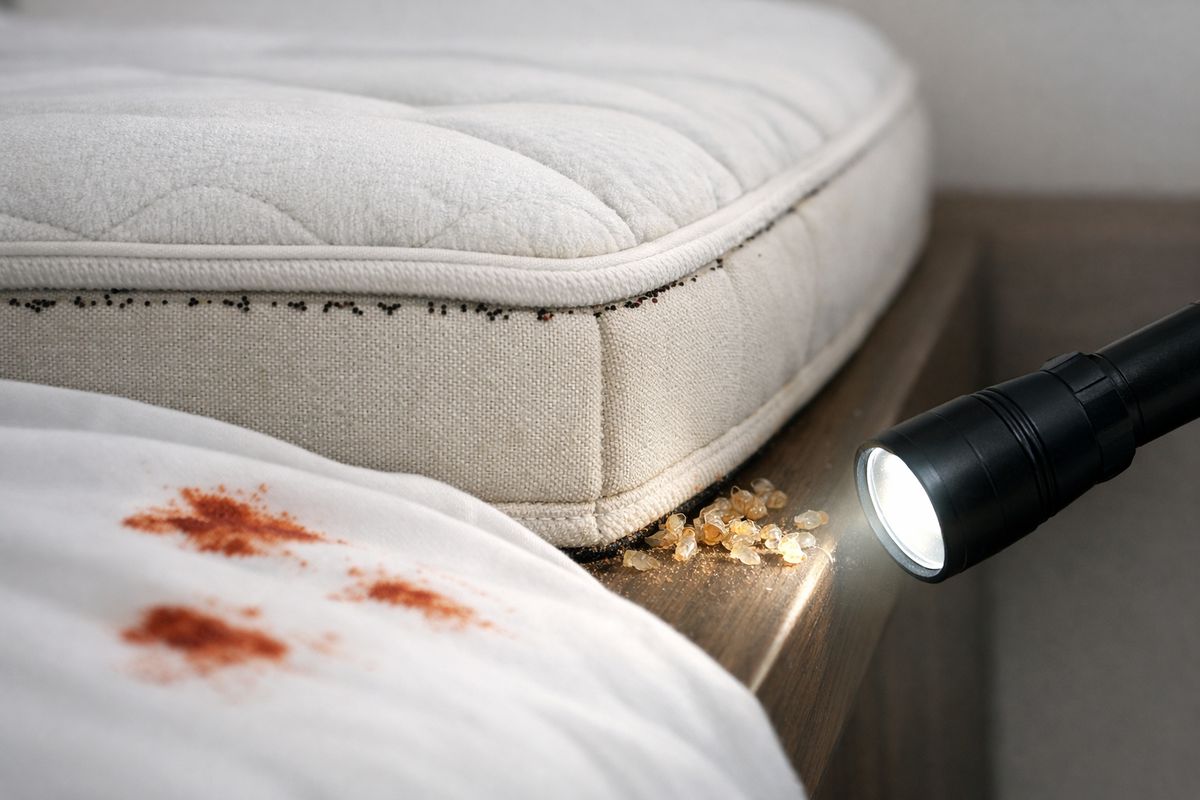
These are one of the strongest clues. Bed bug fecal spots look like tiny black or very dark brown dots, a bit like someone touched the fabric with the tip of a marker. You often find them along mattress seams, on box springs, in headboard joints, under couch cushions, or along baseboards near the bed.
A useful detail: these spots can smear slightly if touched with a damp cloth. The EPA describes them as dark spots that can bleed into fabric like marker ink. Dirt usually does not do that.
Rust-Colored Blood Stains on Sheets or Pillowcases
Small rusty or reddish smears on bedding can happen when a recently fed bed bug gets crushed while you sleep. These stains are often irregular, not perfectly round, and they tend to show up near where your body rests.
Not every blood spot means bed bugs. A cracked cuticle, dry skin, or a healing scratch can also leave a mark. But if you notice fresh smears along with dark specks or shed skins, the pattern becomes much harder to dismiss.
Shed Skins and Eggshells
Bed bugs outgrow their shells as they develop. Those shed skins look pale, thin, and hollow, almost like a ghost version of the bug. Eggshells are tiny, light-colored, and easy to miss unless you look closely with a flashlight.
One shell by itself could mean a hitchhiker. Repeated finds in the same area suggest active, ongoing bed bug activity. That is a very different situation.
Live Bed Bugs
Seeing one live bed bug near the bed, couch, or recliner should never be brushed off. Bed bugs are secretive by nature. If you can see one in daylight or during a casual check, more may be hiding in the nearby seams and cracks.
This is the part people talk themselves out of. Maybe it was just one. Maybe it came in on a bag. Maybe it is not a big deal. Honestly, that line of thinking wastes time. One visible bug near a resting area is enough reason to inspect thoroughly and start lining up professional help.
A Sweet, Musty Odor in Heavy Infestations
A sweet, musty smell can happen in heavier infestations, but it is not a good early warning sign. Most people will not notice an odor at the beginning, and some never notice it at all.
So yes, the smell is real in some cases. But no, you should not wait for your room to smell strange before taking the problem seriously.
Are Bites a Reliable Sign of Bed Bugs?
No. Bites can support suspicion, but they do not confirm bed bugs.
This is one of the biggest points of confusion, and it causes a lot of delay. People either panic over every welt or dismiss the problem because nobody in the house seems bitten. Both reactions can be wrong.
What Bed Bug Bites Often Look Like
Bed bug bites often turn into itchy red welts, sometimes arranged in lines or clusters. You may notice them after sleeping, especially on exposed skin like the arms, shoulders, neck, or lower legs. The bite itself is usually painless at the time.
A lot of people describe a pattern of waking up fine, then noticing itchy marks later that morning. In some cases the marks look like the classic “breakfast, lunch, dinner” line. In other cases, they just look like random bug bites. The CDC notes that the marks may appear randomly or in a straight line, which is exactly why bites alone are so slippery as evidence.
Why Bite Reactions Can Be Misleading
Some people react strongly. Some barely react. Some show no visible marks at all. That alone makes bites unreliable.
Timing adds even more confusion. Reactions can show up days later, and in some cases up to two weeks later. So the welt you noticed this morning may not match what happened last night. And the person sleeping next to you may have no marks at all, even if bed bugs are present.
Bed Bug Bites vs. Fleas, Mosquitoes, and Other Skin Irritations
Flea bites often show up around the ankles and lower legs. Mosquito bites are usually more random and tied to outdoor exposure. Skin irritation from detergent or heat tends to be broader and less bite-like.
But here’s the thing: none of those comparisons can diagnose bed bugs with confidence. The EPA warns that bed bug bites can resemble mosquito bites, chigger bites, eczema, fungal infections, or hives. Skin can raise suspicion. Physical signs confirm it.
How to Check Your Home Without Making the Problem Worse
A good home inspection is slow, close, and contained. Panic tends to create two problems at once: you miss the actual signs, and you accidentally spread bugs into other rooms.
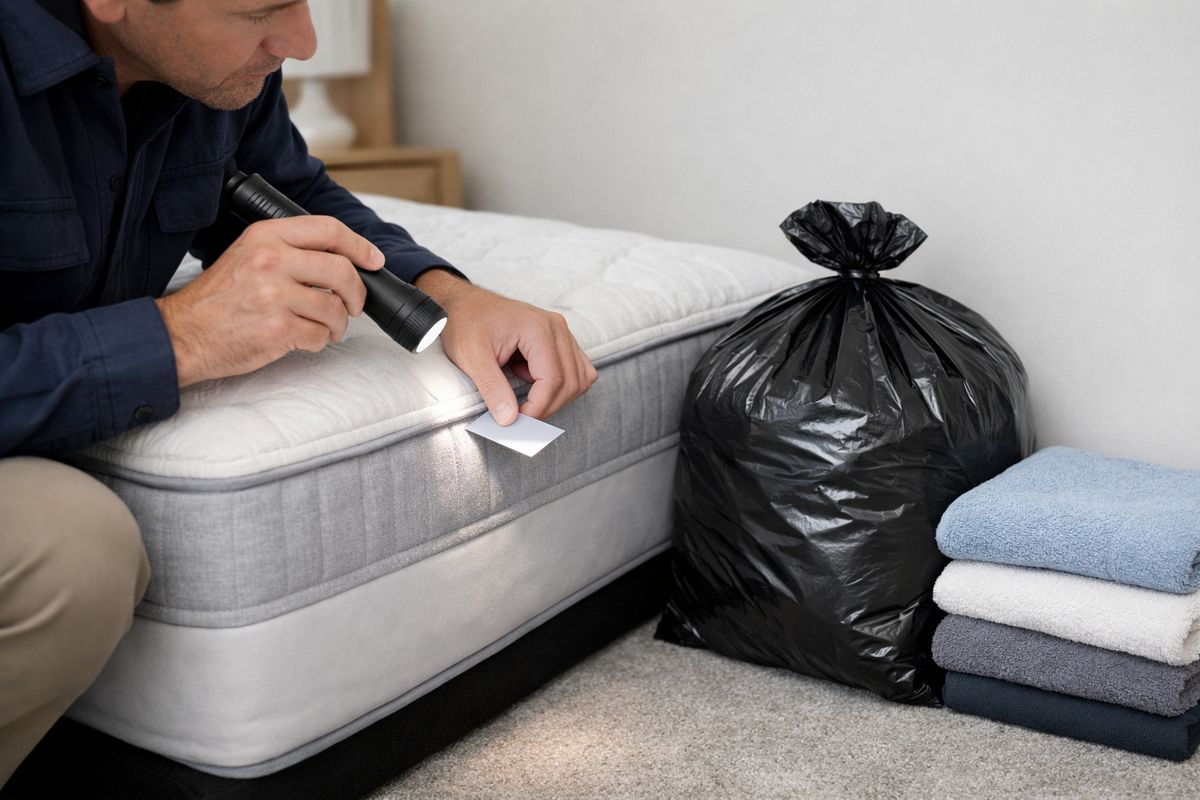
Use a flashlight. Use a thin card to run along seams and cracks. Keep a trash bag nearby for anything washable you plan to isolate. And stay focused on where you rest.
Start With the Bed and Work Outward
Begin with the mattress seams, piping, tags, and folds. Then look at the box spring, especially the underside and corners. Check the bed frame joints, screw holes, headboard, and anything attached to the wall near the bed.
Move slowly. A flashlight held low across the surface helps tiny eggs, skins, and dark spots stand out. A card or old gift card can help you separate tight seams without tearing fabric. If you want a more detailed prep guide before treatment, this walkthrough on getting your home ready step by step helps keep the process organized.
Don’t Forget Sofas, Chairs, and Other Resting Spots
If you fall asleep on the couch, spend every night in the recliner, or work from one upholstered chair for hours, inspect those places too. Bed bugs follow access to a sleeping or resting host. They do not care whether that host is in a bed or on a sectional by the window.
Check cushion seams, zippers, skirt edges, and the frame beneath the furniture. Look under cushions, not just on top of them.
Check Luggage, Laundry Areas, and Recently Moved Items
Travel is one of the most common ways bed bugs get into a home. So is secondhand furniture. A suitcase left open on the bedroom floor after a weekend trip can be enough. The same goes for a used nightstand, an upholstered chair from a curb pickup, or boxes from a recent move.
Inspect luggage seams, closet floors, unpacking areas, laundry baskets, and recently moved fabric items. If you came home from a trip, running dryer-safe clothing on high heat for 30 to 45 minutes is a practical early step. The same idea applies to items from overnight guests or secondhand sources.
What Not to Do During an Inspection
Do not drag bedding through the house. Do not move furniture into another room “just for now.” Do not start spraying random products into every crack before you even know what you found.
Those moves feel productive, but they often spread the problem. Bed bugs hitchhike easily, and disturbed bugs may scatter deeper into walls, furniture, and adjacent rooms. If you suspect established activity, your goal is to contain and confirm, not scramble.
Signs That Mean You Should Worry Now, Not Later
Some signs are annoying. Some signs mean the problem is getting established. Knowing the difference can save you weeks of stress.
You’re Finding Signs in More Than One Room
Multiple rooms usually means the problem is no longer small. If evidence shows up in the main bedroom and the guest room, or on the couch and in the bedroom, that points to spread rather than a one-time hitchhiker.
In attached housing, that matters even more. Bed bugs can move through wall voids, shared structures, and carried belongings. Once the signs are in more than one area, it is time to think bigger than spot treatment.
You Keep Seeing New Spots, Skins, or Bites Week After Week
Fresh evidence over time is the real issue. One old stain is ambiguous. New dark spots on clean bedding, a new shed skin under the same bed leg, or repeated bites after laundering and cleaning suggest active bed bug activity.
That pattern matters more than any single clue. Repetition means the issue is current.
You Live in an Apartment, Condo, or Attached Home
In multi-unit housing, speed matters more. Bed bugs can move between units, and delay makes coordination harder. If you live in an apartment, duplex, condo, or townhouse, signs should prompt quick reporting and professional evaluation.
This is not about blame. It is about containment.
Sleep Loss, Stress, and Constant Checking Are Taking Over
Bed bugs get into your head fast. You start checking the sheets every morning. You feel every little itch at night. You stop relaxing on the couch. Sleep gets lighter, shorter, and more tense.
That stress is real. One housing survey found meaningful links between exposure and trouble sleeping, along with higher anxiety and depression screening rates. If the mental toll is ramping up, that is already enough reason to stop trying to tough it out alone.
When DIY Makes Sense and When It Usually Doesn’t
Some DIY steps help. A lot of DIY “solutions” do not. The trick is knowing the difference.
Helpful Early Steps You Can Take Right Away
Start by reducing clutter around the bed and couch. Fewer piles means fewer hiding places. Bag washable fabrics and run them through a hot dryer. Vacuum seams and cracks carefully, then empty the vacuum outside right away. Mattress and box spring encasements can help trap bugs inside and make future inspection easier.
These are support steps. Good ones. Worth doing. But they are not a guaranteed stand-alone fix once physical signs are established. If you need a room-by-room prep list, this 15-task treatment prep guide lays out the basics clearly.
DIY Moves That Often Backfire
Foggers are a classic mistake. So are random over-the-counter sprays, essential oils, and panic-throwing furniture onto the curb before the rest of the room is checked.
The problem is simple: bed bugs hide deep, scatter easily, and eggs survive a lot of half-measures. Some sprays kill exposed bugs and miss the rest. Some products push bugs into harder-to-reach cracks. Some create false confidence, which is almost worse.
Why Bed Bugs Are So Hard to Eliminate Completely
Bed bugs reproduce faster than most people expect. A female can lay 3 to 5 eggs a day and more than 500 over a lifetime. Eggs can hatch in about a week under room conditions, and young bugs can mature within weeks. That turns “a few signs” into a growing problem much faster than your laundry routine can keep up.
Then there is the hiding issue. Bed bugs stay in seams, screw holes, baseboards, outlet covers, furniture joints, and other spots that are easy to miss. Add the fact that they can survive for months without feeding, and you get a pest that can outlast casual treatment attempts. It is no surprise that 76% of pest professionals say bed bugs are the hardest pest to eliminate.
When to Call a Professional for Bed Bug Heat Treatment
Call when signs are confirmed and the problem looks active, persistent, or spread beyond one tiny area. Waiting usually costs more in time, stress, and money.
Heat treatment comes up so often because it addresses a big weakness in DIY control: you cannot realistically chase bed bugs one by one through every crack, seam, cushion, and screw hole.
Clear Signs It’s Time to Call for Heat
If you have found live bugs more than once, it is time. If you see dark spots, skins, or eggs in several places, it is time. If signs keep showing up after laundering, vacuuming, and cleanup, it is time. If the problem has spread to couches, recliners, multiple bedrooms, or followed travel or used furniture into the house, it is definitely time.
This is also the point to start comparing options. A practical guide on when professional help makes sense can help you stop spinning your wheels.
Why Heat Treatment Appeals to So Many Homeowners
Professional heat treatment raises room temperatures high enough to kill bed bugs across life stages, including bugs hiding in cracks, fabrics, and furniture. Instead of chasing visible insects like you are swatting flies one at a time, heat treats the whole problem zone more like an oven.
That whole-room approach is exactly why many homeowners prefer it. It can reach places sprays miss, and it targets adults, nymphs, and eggs when done correctly. If you want a plain-English overview of how whole-home thermal treatment works, that page breaks down the process.
What Heat Can and Can’t Do
Heat is powerful, but it is not magic. Success depends on reaching lethal temperatures everywhere bed bugs are hiding, not just in the middle of the room. Eggs are tougher than adults, which is why professional monitoring matters so much. Research on egg heat resistance found that eggs can survive longer than adults at lower temperatures, and treatment works best when all hiding spots get hot enough for long enough.
That means clutter, insulated items, packed storage, and missed cool zones can reduce effectiveness. This is also why comparing heat, chemical treatment, or a mix makes sense when the infestation is larger or the layout is complicated.
What to Expect Before, During, and After a Heat Treatment
For a lot of homeowners, the fear is not just “Do I need treatment?” It is “What happens if I say yes?” The good news is that the process is much less mysterious once you know the flow.
Preparing Your Home for Treatment
Preparation usually includes laundering certain fabrics, reducing clutter, and removing heat-sensitive items. That can include candles, some cosmetics, certain medications, plants, pets, and anything that could melt, warp, or be damaged by high temperatures. Electronics often need special handling instructions rather than automatic removal.
Follow the prep sheet exactly. This is one of those moments where details matter. Good prep helps heat move through the room instead of getting blocked by piles, packed bins, and tightly crammed closets.
What Happens on Treatment Day
On treatment day, equipment is brought in and the home or treatment area is heated in a controlled way. Temperatures are monitored throughout the process so the space is treated as a system, not just blasted in random corners.
That matters because bed bugs hide where heat can struggle to penetrate. Professionals use sensors and airflow strategies to help hot air reach furniture, seams, voids, and tucked-away harborages. The goal is not “the room felt hot.” The goal is lethal heat where the bugs actually are.
How You’ll Know the Treatment Worked
After treatment, monitoring matters. You may still see old stains, dead bugs, or leftover shed skins. That does not automatically mean failure. Old evidence can stick around long after live activity is gone.
What matters is whether fresh signs continue. New dark spotting, new live bugs, fresh bites paired with physical evidence, or newly found eggs suggest ongoing activity. If you are weighing the value side too, understanding what changes the final quote helps set expectations before you commit.
Common Myths That Keep People Waiting Too Long
The worst bed bug myths all have one thing in common: they buy the infestation more time.
“If My Home Is Clean, It Can’t Be Bed Bugs”
Clean homes get bed bugs too. Bed bugs are after blood meals, not crumbs or dirt. A spotless bedroom can still have an infestation if bugs came in on luggage, clothing, furniture, or neighboring units.
So no, bed bugs are not a housekeeping verdict. They are a hitchhiking pest.
“If I Only Have Bites, I Definitely Have Bed Bugs”
Bites can raise the question, but they do not answer it. Some people have strong reactions, some have none, and lots of skin issues mimic bug bites. You need physical signs to confirm the problem.
“I Found One Bug, So I Can Just Handle It Myself”
Sometimes one bug really is one bug. More often, one visible bug is the tip of the iceberg, especially if it is near the bed or couch. Hidden eggs, nymphs, or harborages may be nearby even when your quick check looks clean.
“If I Throw the Mattress Out, the Problem Is Gone”
Mattresses are just one hiding place. Bed bugs also live in frames, headboards, nightstands, baseboards, outlet covers, couches, and wall cracks. Tossing the mattress without addressing the rest of the room can leave you with a new mattress and the same problem.
Quick Questions Homeowners Usually Ask
Can Bed Bugs Be in a Car?
Yes, though cars are usually not the main long-term hiding place the way bedrooms and couches are. A car becomes worth checking if you transported infested items, left luggage there after travel, or spend long stretches sitting in one vehicle seat.
Can You Have Bed Bugs and Never See Bites?
Yes. Some people show no visible reaction at all. That is one reason skin alone is such a poor way to diagnose bed bugs. Physical signs matter more.
How Fast Do Bed Bugs Spread?
Bed bugs do not fly, but they spread effectively by hiding in luggage, laundry, furniture, and other belongings. Inside a home, populations can build faster than expected because eggs hatch quickly and young bugs mature within weeks.
Should You See a Doctor for Bed Bug Bites?
If the itching is severe, the skin is getting infected from scratching, you have swelling that seems extreme, or you are not sure what caused the rash, medical care makes sense. Bed bug bites themselves are usually not dangerous, but complications from scratching or allergic reactions deserve attention.
Frequently Asked Questions
What are the first bed bug signs most people miss?
The earliest clues are usually tiny dark fecal spots, light shed skins, and small blood smears on sheets or pillowcases. Most people miss them because they look like lint, dirt, or ordinary fabric marks at first glance.
Where should you check first if you suspect bed bugs?
Check the mattress seams, piping, tags, and the area around the head of the bed first. Then move to the box spring, bed frame joints, headboard, and nearby furniture. If you nap on the couch, inspect that next.
Do bed bug signs always mean a large infestation?
No. Early signs can show up before the infestation gets large, which is exactly why acting early helps. But repeated signs in several places usually mean the problem is active and growing.
Can bed bug signs show up without seeing a live bug?
Yes. In fact, that is common. Dark spots, shed skins, eggshells, and blood smears often show up before you ever catch a live bug in the open.
How long should you wait before calling a professional?
If you find physical evidence, do not wait for weeks of “just to see.” A live bug, repeated dark spots, shed skins, eggs, or signs in more than one room are enough reason to call promptly.
What to Do This Week If You’ve Noticed Bed Bug Signs
Try one calm, specific thing this week: inspect your mattress seams, headboard, and main couch with a flashlight and a thin card. If you find dark spots, shed skins, eggs, or a live bug, stop guessing and schedule a professional inspection right away. That one hour of checking can save you a lot of lost sleep later.