
You clean the sheets, vacuum the mattress, spray what you can find, and for a few days it feels like you won. Then a week later, you spot fresh black marks near the bed or wake up worried all over again. That’s why bed bug eggs matter so much: bed bug eggs are the stage that keeps an infestation going, because they’re tiny, hidden, glued in place and much harder to wipe out than adult bugs.
What Bed Bug Eggs Are and Why They Cause So Much Trouble
Bed bug eggs are the earliest life stage of a bed bug, and frankly, they are the reason a bed bug problem can keep coming back after a cleanup that seemed thorough. An adult female can lay 2 to 5 eggs per day, and over time that adds up fast. Even a small number of surviving eggs can restart the whole cycle.
Adult bed bugs move, so you sometimes find and kill them. Eggs do not. They sit tucked into seams, cracks, screw holes and rough surfaces near where you sleep or lounge. Because they stay still, blend in and stick to surfaces with a glue-like coating, they’re easy to miss during the kind of cleaning most people do in a rush at 10 p.m. after the panic hits.
That is the core problem. If adults die but eggs remain, the infestation is not over. It is just delayed.
What Bed Bug Eggs Look Like
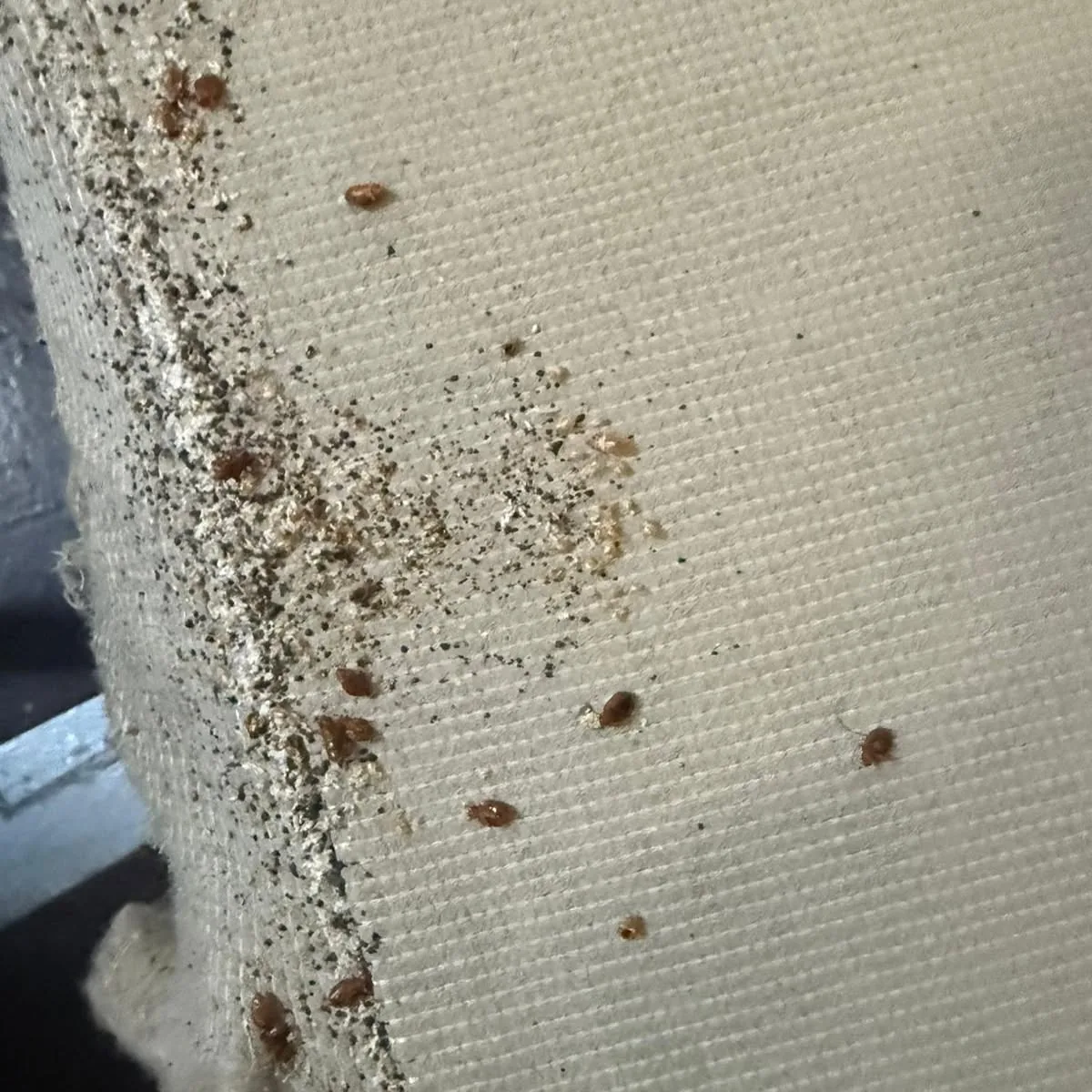
Bed bug eggs are tiny, usually white to pearly white, and oval-shaped. Think of something between a grain-like speck and the tip of a pinhead. Most are about 1/20 to 1/16 of an inch long, so you are not looking for something obvious and dramatic. You are looking for something easy to dismiss as lint, dust or a tiny flake of paint.
On dark fabric or wood, eggs can stand out a little better. On pale mattress seams, unfinished wood, paper backing or light upholstery, they can almost disappear.
Can You See Them?
Yes, you can see them, but only if you look closely and have good light. A flashlight helps a lot. So does slowing down.
The catch is that bed bug eggs are often visible in theory and missed in practice. You glance at a mattress seam, see nothing moving and move on. But eggs do not move. They hide in piping, fabric folds, staple lines and narrow wood joints, so your eyes skip right past them unless you inspect inch by inch. Some pest control guidance notes that eggs are small enough that a magnifying lens can help with detection, especially when you are checking light-colored surfaces.
Eggs vs. Shells vs. Droppings
A live bed bug egg is usually white, pearly and intact. A hatched eggshell is also pale, but it looks emptier and more translucent, almost like a tiny hollow cap left behind. Because shells often stay stuck where they were laid, you can find old eggshells even after hatching.
Droppings look completely different. Bed bug fecal spots are dark brown or black and often resemble tiny ink dots or marker-like specks on seams, fabric or wood. If you see black spotting plus pale specks plus shed skins, that combination is much more meaningful than bites alone.
This matters because panic causes misidentification. Salt crystals, dandruff, lint pills, pale sawdust and paint flecks get mistaken for eggs all the time. Real bed bug evidence usually shows up as a pattern, not one random speck.
Where Bed Bug Eggs Hide in Your Home
Bed bug eggs are usually laid in places close to where your body stays still for a while. That means mattress seams, box spring corners, bed frames, headboards, nightstands, baseboards near the bed, couch seams, recliners, furniture cracks, behind loose wallpaper and clutter sitting close to resting areas.
If you spend two hours every evening in the same recliner, that chair matters almost as much as the bed. If your guest room is rarely used, it is less likely to be the main egg-laying zone unless bugs were carried there on belongings.
A useful mental picture helps here: bed bugs do not want a commute. Short distance to a blood meal is the goal.
Why Eggs Are Laid Near Beds, Couches and Recliners
Bed bugs feed on blood, usually when you are asleep or sitting still long enough for easy access. Because of that, eggs tend to be laid close to beds, couches and recliners rather than scattered randomly all over the house. Pest inspection guidance specifically points inspectors toward beds, couches and recliners because that is where active signs are most likely to show up.
That does not mean bugs stay only on the mattress. Bed frames, nearby furniture, trim, wall cracks and even items under the bed can become hiding spots. But distance still matters. The closer the hiding place is to where you rest, the more suspicious it is.
The Sneaky Surfaces That Help Eggs Stay Put
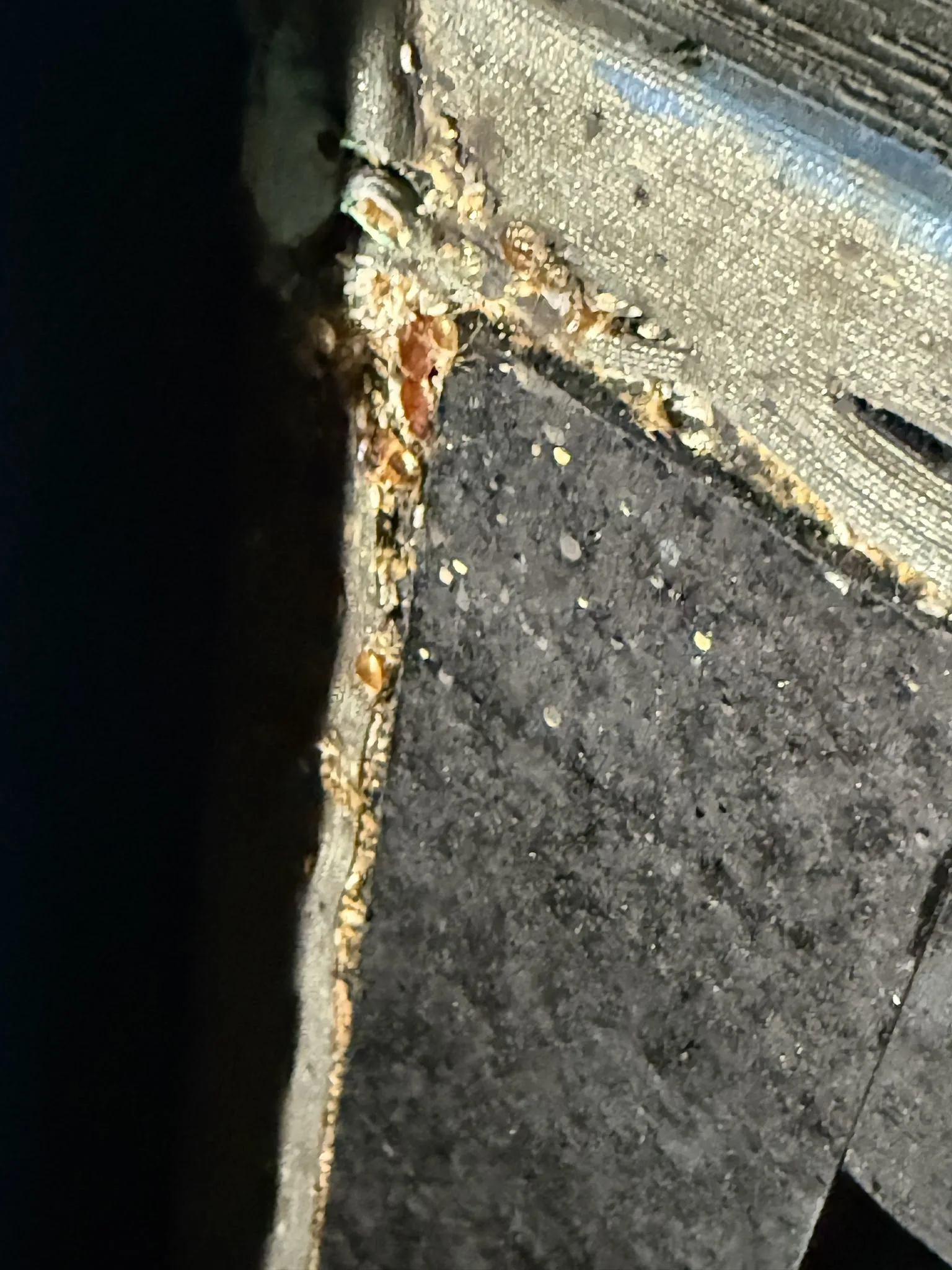
Bed bug eggs are coated with a glue-like material when laid. That sticky coating acts like a tiny dab of cement. It helps eggs cling to rough wood, fabric seams, paper backing and narrow cracks even after hatching.
That is why casual cleaning often falls short. Shaking blankets, wiping a headboard or running a vacuum quickly across a seam may remove dust and loose debris while leaving some eggs right where they started. Rough surfaces give the eggs something to grab onto, and that makes real removal harder than most people expect.
Why Bed Bug Eggs Are So Hard to Eliminate
This is the part most people learn the hard way. Bed bug eggs are hard to eliminate for four simple reasons: they are tiny, hidden, sticky and poorly controlled by many common insecticides. That is why one quick spray almost never fixes the problem.
If adult bugs are the visible part of the problem, eggs are the part quietly keeping the problem alive. You can kill what you see and still lose the battle because the next wave is already sealed into cracks nearby.
They’re Tiny Enough to Miss
An egg can sit inside a screw hole, along mattress piping, near a staple under a box spring, or in the joint where two pieces of wood meet. Even during a serious cleaning session, those places often get a quick pass instead of a slow inspection.
That is not carelessness. It is just how small the target is. Bed bug eggs are about 1/20 inch long, so missing them is normal. Unfortunately, normal is enough to let an infestation survive.
They Survive Treatments That Kill Adults
Many insecticides work better on moving bugs than on eggs. Some bed bug populations are also resistant to common chemicals, and research shows that resistance can show up even at the egg stage. That means a store-bought spray may knock down a few visible bugs and still leave eggs behind, especially in hidden areas or resistant infestations.
That is one reason treatment plans often require repeat visits spaced out over time. The goal is often to catch newly hatched nymphs after eggs survive the first round. If you want a deeper look at what multi-step control usually involves, this guide on what real treatment usually includes helps connect the dots.
They Hatch After You Think the Problem Is Gone
This is the trap. You treat, activity drops and the room feels quiet. Meanwhile, eggs are still developing out of sight.
At room temperature, eggs often hatch in roughly 5 to 10 days, though conditions can stretch or shorten that window. So your first treatment can seem successful while the next batch is still sealed up. Then the hatching starts, and it looks like the problem came back overnight.
It did not come back. It never fully left.
How Fast Bed Bug Eggs Hatch and Restart an Infestation
Bed bug eggs hatch quickly enough that timing really matters. In warm indoor conditions, you can clean thoroughly on a Saturday and still have new nymphs appearing within a week or two if eggs were missed. That is why follow-up is part of the fix, not an optional extra.
A female bed bug can lay dozens to hundreds of eggs over time, depending on conditions. Under favorable conditions, populations can grow fast. That growth does not always look dramatic at first, because the early stage is hidden. Then suddenly the signs are obvious.
Typical Hatching Timeline
A practical rule is this: expect eggs to hatch in about 5 to 15 days at room temperature, with cooler conditions slowing things down. Some sources place typical hatching at around 10 to 15 days, while others show a shorter range in warmer indoor settings. Either way, you are not working with a long pause.
If temperatures stay above 70 degrees Fahrenheit, hatching may happen in as little as 6 days and often within about two weeks. In cooler spaces, hatching can take longer, even up to several weeks. The point is not memorizing the biology. The point is understanding why skipping a second inspection is such a common mistake.
What Happens Right After Hatching
A newly hatched bed bug is called a nymph. It is small, pale and ready to feed. After feeding, it grows, molts and moves through several immature stages before becoming an adult.
Because these young bugs are so small, early rebound can be hard to spot. You may not see obvious adults right away. Instead, you notice fresh spots, more anxiety around the bed, or repeated signs after you thought cleaning worked. That rebound is exactly what feeds repeat infestation problems when eggs survive the first treatment.
Signs You May Have Bed Bug Eggs, Not Just Adult Bed Bugs
Real-life bed bug evidence tends to cluster. You might notice pale specks tucked into seams, tiny translucent shells, black fecal spotting, shed skins or recurring signs after washing and vacuuming. Seeing one bite on your arm is not enough to diagnose anything. Seeing multiple physical signs near a bed or couch is much stronger evidence.
Bites are unreliable because skin reactions vary wildly. Some people react strongly. Some barely react at all. Some marks that look like bed bug bites come from something else entirely. Physical evidence on the furniture matters more.
A Simple At-Home Inspection Routine
Start with the bedding and remove it carefully so you do not shake possible bugs or eggs into other parts of the room. Check the fitted sheet, pillow seams and any stains or spotting. Then move to the mattress itself, especially the piping, seams, handles, tags and label area.
Use a flashlight at the edge of the mattress label and along the back inside corner of a nightstand. That specific little corner catches a surprising amount of hidden activity because it is dark, still and close to the bed. After the mattress, inspect box spring corners, the underside fabric, headboard joints, bed frame hardware and screw holes. Then check nearby furniture, baseboards and couch seams if you spend time there.
If you are still sorting out what signs point to bed bugs instead of something else, a guide to the easiest clues to spot at home can help you compare what you are seeing.
When Eggs Are More Likely Than Bites to Give the Problem Away
Bites can send you searching, but eggs and other physical signs usually confirm the problem. That is especially true if you have already cleaned, changed linens or treated the room and still keep seeing black spotting or pale casings near the same resting area.
In other words, your skin may raise the alarm, but your furniture tells the story.
Common Mistakes That Let Bed Bug Eggs Survive
Most mistakes happen because the obvious actions feel productive. You clean hard, spray fast, toss things out and hope for a clean break. But bed bug eggs punish rushed fixes.
The good news is that these mistakes are common and fixable.
Relying on a Single Spray
One treatment usually misses eggs, especially hidden eggs deep in cracks, wood joints, seams or behind furniture. Even when a spray kills exposed bugs, it may not reach the egg stage effectively. That is why many DIY sprays disappoint people so quickly.
A single spray is not a strategy. It is one tool.
Throwing Out the Mattress Too Soon
Getting rid of the mattress can feel decisive, but it often solves the wrong problem. If eggs remain in the bed frame, baseboards, headboard, couch or nightstand, the infestation continues. Then the new mattress gets exposed too.
If you do discard something, it needs to be part of a larger containment plan, not a panic move made before inspection.
Using Foggers or Bug Bombs
Foggers sound like they should work. In reality, they do a poor job reaching the hiding spots that matter most for bed bugs and eggs. They can also drive bugs deeper into walls or adjacent rooms, especially in apartments and shared-wall homes.
Plainly put, foggers are a bad shortcut.
Skipping Follow-Up Checks
This is the mistake that makes people think treatment failed for mysterious reasons. The reason is usually simple: eggs hatched later.
Follow-up inspection is part of control because the infestation timeline includes delayed hatching. If eggs were present, checking again after treatment is not optional. It is built into how bed bug elimination works.
What Helps Get Rid of Bed Bug Eggs
What helps is a system, not a miracle product. Inspection, vacuuming, laundry, high-heat drying, encasements, clutter control, targeted treatment and repeat checks work better together than any one step works alone.
That sounds like a lot, but the logic is simple. You are trying to remove what you can, kill what heat can reach, reduce hiding places and catch what hatches later.
Vacuuming and Physical Removal
Vacuuming helps by removing live bugs, shed skins, debris and some eggs from seams, cracks, edges and crevices. But it does not finish the job on its own. Some guidance is blunt that vacuuming alone is not effective for bed bug control because eggs cling tightly and are often missed.
Go slowly along mattress seams, bed frame joints, baseboards and furniture cracks. Afterward, empty the vacuum carefully or seal and discard the bag right away so nothing escapes back into the room.
Laundry and High-Heat Drying
Washing helps, but heat does the heavy lifting. Bedding, clothes and soft washable items should go through a hot dryer long enough to kill all life stages. Extension guidance commonly recommends at least 20 to 30 minutes on high heat, depending on the item and dryer.
Bag laundry before moving it through the house, and use clean bags for items after drying. That small swap matters, because carrying loose laundry from room to room is an easy way to spread bugs or eggs.
Mattress and Box Spring Encasements
Encasements zip around the mattress or box spring and trap any remaining bugs inside. They also remove a lot of hiding places from the sleeping area and make future activity easier to spot. Instead of endless seams and folds, you get a smoother surface that is easier to inspect.
Encasements do not kill hidden eggs elsewhere in the room, but they make the bed itself much easier to manage.
Decluttering Without Spreading the Problem
Clutter gives bed bugs extra harborage, which is just a pest-control term for hiding space. Reducing clutter helps, but only if you do it carefully.
Bag items before moving them. Keep belongings from the affected room contained. Avoid carrying loose blankets, stacks of clothes, cardboard boxes or random drawer contents through the house. Eggs, nymphs and adults can hitchhike on all of it. Think of clutter control like moving glitter. If you are sloppy, it gets everywhere.
Does Heat Kill Bed Bug Eggs?
Yes, heat can kill bed bug eggs, and it is one of the more reliable options. But only the right heat works. A room feeling hot is not the same as every crack, cushion seam, wall gap and furniture joint reaching lethal temperature for long enough.
That distinction matters more than most people realize.
Why Temperature and Time Both Matter
Bed bug eggs are more heat-tolerant than adult bugs, so partial heating is not good enough. Research on whole-room heat treatment found that eggs required stronger heat exposure than adults, and that temperature and time both affected survival. In practical terms, cool pockets inside furniture or packed belongings can protect eggs even when the room itself feels very hot.
That is why a dryer works well for washable items. The heat is concentrated and consistent. A hot bedroom with uneven airflow is a very different situation.
DIY Heat vs. Professional Heat Treatment
A home dryer is great for bedding, clothes and other washable fabrics. It is one of the safest and most useful tools you have. Whole-room or whole-home heat treatment is a different category. That usually requires commercial equipment, monitoring and careful setup so the target temperature reaches the exact places where eggs are hiding.
Improvised heating with space heaters, ovens, hair dryers or other unsafe hacks is not the answer. It often misses hidden egg pockets and creates obvious fire risks. If the infestation is established, professional heat treatment or a professional multi-step plan is usually far more reliable.
How Much Heat It Takes to Kill Bed Bug Eggs
“Enough heat” does not mean the thermostat reading, the heater setting or how hot the room feels when you walk in. It means the coldest hiding places reached lethal temperatures for long enough.
The EPA says infested items or areas should reach at least 120°F for 90 minutes to ensure eggs are killed. In real-world structural treatments, companies often run hotter and longer than that because rooms are uneven, furniture traps cool pockets and hidden spaces heat slowly.
The key numbers to know
A few numbers help this make sense. Eggs are often cited at around 122°F for kill thresholds. The EPA uses 120°F for 90 minutes as a practical benchmark for infested articles or areas. Field guidance also shows how time stretches as temperature drops: 120°F for 8 hours, 125°F for 6 hours, 130°F for 4 hours, 135°F for 3 hours, and 140°F for 2 hours.
That does not mean every treatment has to match those exact numbers. It means there is no shortcut around the same principle: lower heat needs more time, and hidden spots need both.
Why room temperature readings can fool you
This is where treatments fail. Air temperature in the center of a room can look great while the bugs hiding under a baseboard or inside a bed-frame joint are still sitting in a cooler pocket.
One field example is especially striking: a room measured 134.6°F, but a probe under a baseboard showed only 102.2°F. That is the difference between a treatment that sounds impressive and one that kills eggs.
Signs the Treatment Worked or Didn’t
Success is measured over time, not by how relieved you feel the same day.
Good signs after treatment
A good result usually looks boring, and that is exactly what you want. Fewer or no live bugs. No fresh dark fecal spotting near the bed. No new cast skins. Monitors and interceptors staying clear over the following weeks.
You may still feel jumpy for a while. That part is normal. What matters is whether actual signs keep showing up.
Red flags that eggs may have survived
Fresh tiny nymphs appearing days later is a major warning sign. So is new spotting near the same side of the bed, or activity concentrated in one corner of the room that seems to have “woken back up.”
The EPA notes that treatment may need repeating because eggs can survive the first round, especially if some areas were missed. If you still have activity after treatment, look for a pattern. One stubborn area often points to an untreated harborage.
When You Should Call a Professional
Call a professional when you keep seeing signs after home treatment, when eggs appear in more than one room, when the infestation seems tied to couches and bedrooms at the same time, when clutter makes inspection hard, or when you live in an apartment or shared-wall building where the problem may not be limited to your unit.
If you have already washed, dried, vacuumed and inspected carefully and the signs keep returning, that is enough reason. You do not need to lose another two weeks proving the problem is stubborn.
What a Good Bed Bug Treatment Plan Usually Includes
A solid treatment plan usually includes inspection, confirmation that the pest is bed bugs, targeted treatment in the right locations, nonchemical steps such as vacuuming or steam, repeat visits and monitoring afterward. This approach is often called integrated pest management, which simply means using several methods together instead of betting everything on chemicals.
That combined approach matters because eggs change the timeline. Killing visible bugs on day one is not the whole job.
Questions to Ask Before Hiring Anyone
Ask whether follow-up visits are included. Ask how eggs will be addressed. Ask what prep is necessary, because some companies hand out long prep lists that create stress without adding much value. Ask whether the plan uses heat, steam, vacuuming, encasements, insecticides or a mix. And if cost is part of the decision, it helps to review what treatment pricing usually looks like before booking anyone.
A good answer should sound specific, not vague. Bed bug control is not a spray-and-pray service.
Common Myths About Bed Bug Eggs
A few stubborn myths keep infestations going longer than necessary. Once you know what is false, the whole situation gets easier to manage.
“If You Don’t See Adults, the Infestation Is Gone”
Not true. Eggs can remain hidden and hatch later, which is why a quiet week does not necessarily mean success. No adult sightings for a few days is encouraging, but it is not proof.
“Bed Bugs Mean Your Home Is Dirty”
Nope. Bed bugs are hitchhikers, not a cleanliness score. Clean homes get bed bugs. Clutter can make them harder to eliminate, but dirt does not cause them.
“Cold, Sprays or Essential Oils Will Handle the Eggs”
Usually not. Many common sprays do a poor job against eggs, and cold works slowly unless temperatures are sustained and controlled. Essential oils may smell active, but smell is not control. Eggs are one of the main reasons shortcuts fail.
“One Deep Clean Fixes Everything”
A deep clean helps, but eggs change the timeline. Even a strong first effort can leave hidden eggs that hatch later. Repeated inspection and follow-up treatment are part of the process, not a sign that you did something wrong.
What to Do Today if You Think You’ve Found Bed Bug Eggs
Start with containment and inspection, not panic. Strip the bedding carefully and bag it before carrying it anywhere. Dry washable items on high heat. Inspect the mattress seams, box spring corners, bed frame joints, headboard and nearby furniture with a flashlight. Vacuum slowly along seams and cracks, then empty the vacuum safely. Avoid moving loose items from room to room.
Most of all, set up a follow-up inspection now, even if you also treat today. Bed bug eggs are a delayed problem, so your plan needs a second look built in from the start.
Try one thing first tonight: grab a flashlight and check the mattress seams and bed frame joints. That small step often tells you more than another round of random spraying.
Getting Rid of Bed Bug Eggs in Richmond Homes
Eggs are the reason we lean on heat treatment for most Richmond-area infestations. Heat kills eggs directly, while Aprehend works on the bugs that hatch afterward. If you have found eggs in a mattress seam or a nightstand, we can usually inspect your home in Central Virginia within a day.
Frequently Asked Questions
How long do bed bug eggs take to hatch?
In typical indoor conditions, bed bug eggs often hatch in about 5 to 15 days. Warmer rooms can speed that up, while cooler conditions can slow it down.
Can you kill bed bug eggs with a vacuum?
Sometimes you can remove some, but vacuuming does not reliably remove all eggs because many are glued to surfaces. Vacuuming helps, but it should never be your only method.
What color are bed bug eggs?
Bed bug eggs are usually white to pearly white. Hatched shells can look even paler and more translucent.
Do bed bug eggs stick to mattresses?
Yes. Bed bug eggs have a glue-like coating that helps them stick to seams, rough fabric areas, wood, paper and cracks in furniture.
Will washing bedding kill bed bug eggs?
Heat is what matters most. Washing can help, but high-heat drying is usually the stronger step for killing eggs and other bed bug stages in washable items.
Should you throw away furniture if you find bed bug eggs?
Not automatically. Throwing out furniture too soon can spread the problem and may not solve it if eggs remain elsewhere nearby. Inspection, containment and a full treatment plan matter more than quick disposal.