
Waking up itchy, spotting a dark speck near a mattress seam, then wondering if your whole house is about to turn into a nightmare, that’s the moment bed bug control stops feeling like a search term and starts feeling personal. The good news is that effective control is not mysterious. The bad news is that it is almost never a one-spray fix.
How to Tell if You’re Dealing With Bed Bugs, Not Something Else
Bed bugs leave clues, but bites alone are not one of the best ones. The signs that matter most are live bugs, tiny black fecal spots that look like ink dots, pale shed skins and eggs tucked into seams and cracks. You may notice them along mattress piping, inside box springs, in bed frame joints, behind headboards, along baseboards or in upholstered furniture close to where you sleep.
If you want a clearer picture of what to look for, this guide to the home clues that stand out fastest helps sort real evidence from panic-scrolling. That matters, because misidentifying the problem can send you down the wrong road for days.
The fastest places to check first
Start where bed bugs like to stay close to a meal source. Check mattress seams and tags first, then the corners and underside of the box spring. After that, look behind the headboard, inside bed frame joints, along slat connections and inside nightstands.
Then move a few feet outward. Upholstered chairs, couches, carpet edges near the bed, and nearby clutter all deserve a look. A flashlight and a slow pace beat a rushed inspection every time.
Why bite marks can send you in the wrong direction
Bite reactions vary a lot. You may swell up in neat rows, or barely react at all. Another person in the same bed may show nothing.
That is why skin marks are only a clue, not proof. Fleas, mosquitoes, skin irritation and allergic reactions can all look similar, especially in the middle of an anxious morning. If you are sorting out one common mix-up, telling the difference quickly can save you from treating the wrong pest.
Bed Bug Control That Works Starts With a Multi-Step Plan
No single spray fixes a bed bug problem. Real bed bug control works best as a layered plan, often called integrated pest management. That means using several methods together so each one covers what the others miss.
A good plan does three jobs at once. It knocks down the live population, keeps hidden bugs from feeding and reproducing, and makes leftover activity easier to spot. That is why laundering, vacuuming, heat, steam, encasements, traps and carefully chosen treatment products work better together than any one method on its own. The EPA’s guidance on integrated pest management backs that up.
Why sprays alone often disappoint
Resistance is a huge part of the problem. Bed bugs have made a comeback partly because of insecticide resistance, travel and bad control practices. Older over-the-counter sprays, especially broad contact sprays used casually, often kill a few bugs you can see and leave the hidden ones behind.
Newer chemistries are promising, and lab work on isocycloseram has looked unusually strong. But even that kind of result does not change the big picture: insecticides are one tool, not the whole toolbox.
The goal: kill bugs, catch stragglers and stop the spread
Think of the plan like fixing a leak and setting a bucket underneath at the same time. You want to remove as many bugs and eggs as possible right away, block easy hiding spots and keep monitoring so stragglers cannot quietly rebuild the infestation.
That is the standard to judge any product or service by. If it only promises a quick kill and says nothing about follow-up, trapping or reinspection, it is probably not enough.
What to Do Right Away if You Think You Have Bed Bugs
The first day matters, mostly because panicked choices can spread the problem. Don’t start sleeping on the couch, and don’t drag bedding loose through the house. Keep the issue contained around the sleeping area while you start cleanup.
Bag laundry and run it through high heat
Seal bedding, pajamas and nearby washable fabrics in plastic bags before moving them. Wash if dirty, but the dryer is the star here. High heat does the heavy lifting against bugs and eggs.
Dry items hot long enough to get everything fully heated through, then store cleaned items in fresh bags or bins until the area is under control. If you are worried about why the problem keeps restarting, understanding why the smallest survivors are so hard to remove makes the laundry step feel a lot less optional.
Vacuum, but do it like it matters
Vacuuming helps, but only if you slow down. Focus on mattress seams, tufts, bed frames, baseboards, carpet edges, cracks and upholstered furniture. Use the crevice tool and pay attention to joints and folds.
Once you finish, seal and discard the vacuum bag right away, or empty the canister contents into a sealed bag and take it outside. Vacuuming removes bugs and some eggs, but it does not reach everything. Think of it as population reduction, not a full solution.
Put on encasements and reduce hiding spots
Mattress and box spring encasements do two useful things. They trap bugs already inside so those bugs eventually die, and they remove a favorite hiding place going forward. Cheap vinyl versions exist, often around $5 to $10, but sturdier encasements usually last longer and tear less.
Clutter reduction helps for the same reason. Fewer stacks, piles and packed corners mean fewer places to hide. It turns a room from impossible to inspect into something you can manage.
The Best Bed Bug Control Methods for Your Home
Different methods solve different parts of the problem. The trick is knowing what each one is good at, and what it is not.
Heat and steam
Heat works well because bed bugs cannot outsmart temperature. Professional whole-room or whole-home heat treatments usually target about 120 to 140°F, enough to kill all life stages when done correctly. Steam is even hotter, near 212°F at the source, and can kill on contact along seams, tufts, cracks and edges.
The catch is speed. If you rush steam, you skim over the surface and miss the deeper hiding spots. Slow, methodical passes matter.
Interceptors, traps and monitors
Interceptors under bed legs are simple and surprisingly helpful. They catch bugs moving to and from the bed, help confirm whether activity is still happening, and give you a way to measure progress.
Rutgers notes that pitfall-style traps can detect a very high share of infestations when used correctly. That makes them one of the best low-cost tools you can buy.
Freezing and heat chambers for smaller items
Freezing works for small non-washable items, but only under the right conditions. Household freezer temperatures around 0°F can work if items stay sealed and frozen for about four days. That fits shoes, books, small bags and similar items.
Consumer heat chambers are often faster and easier for luggage, backpacks and shoes. They usually run about $200 to $350, so they make the most sense if you travel often, live in a higher-risk building, or want a reusable tool instead of repeated guesswork.
Targeted insecticides, dusts and professional products
Residual sprays and dusts can help when applied to cracks, crevices, voids and other hiding zones. Used well, they create a barrier that catches bugs moving through treated areas later.
Used badly, they can make control harder by pushing bugs deeper into walls or scattering the infestation. Follow the label exactly, avoid random over-application and remember that resistance is real. If you want an example of how a service combines tools instead of leaning on one fix, this outline of professional treatment options shows what a layered approach usually includes.
What Usually Does Not Work, or Makes the Problem Worse
Some fixes are popular because they feel active. That does not mean they solve anything.
Foggers, bug bombs and random spray-and-pray treatments
Foggers sound powerful, but bed bugs hide in tight cracks, seams and joints where drifting mist often does not reach. Worse, scattered spraying can push bugs into harder-to-treat places.
That means more hiding, more spread and more frustration. You spent money and bought yourself a bigger puzzle.
Rubbing alcohol, dryer sheets, mothballs and ultrasonic gadgets
These are the pest-control version of putting a bandage on a leaky pipe. You may feel like you did something, but the infestation keeps going.
Rutgers specifically warns against rubbing alcohol, dryer sheets, mothballs, ultrasonic devices, foggers and most consumer sprays as reliable bed bug fixes. Honestly, this is where a lot of wasted money happens.
Throwing out your mattress too early
A mattress is often treatable with encasement, vacuuming and targeted work around seams and the bed frame. Tossing it too soon creates hassle, cost and a chance to spread bugs through the house or apartment hallway.
If an item truly has to go, wrap or mark it so nobody else brings the problem home by mistake.
Should You Do It Yourself or Call a Professional?
This is really a decision about scope, consistency and time.
When DIY makes sense
DIY can work when the infestation looks small, activity seems limited to one sleeping area, and you can stick with a full plan for several weeks. The highest-value low-cost tools are bags, encasements, traps, laundry, vacuuming and steam.
If you stay organized and catch it early, that combination can go a long way.
When to call a pro right away
Call sooner if you are seeing bugs in multiple rooms, still spotting activity after cleanup, or living in an apartment, condo, duplex or other shared-wall housing. Bed bugs can spread fast, and coordinated treatment matters a lot more in those settings.
Mobility limits, heavy clutter or a need for fast resolution also push this toward professional help. In those cases, repeated DIY attempts often just burn time.
What to ask before hiring a bed bug company
Ask how the inspection works, whether follow-up visits are included, what prep you need to do, and whether the plan uses heat, chemicals, steam or a mix. Ask how monitoring continues after treatment and what the warranty covers. If you are comparing budgets, a separate guide on what treatment pricing usually includes helps you spot the difference between a real plan and a cheap-looking quote.
What Bed Bug Control Costs and Where Your Money Helps
Money helps most when it buys visibility and containment first, then stronger treatment if needed.
Low-cost items worth buying first
Start with encasements, interceptor traps, heavy-duty bags or bins and laundry supplies. These are not flashy purchases, but they do real work. Better encasements usually beat the cheapest vinyl ones because they last longer and stay zipped.
Mid-range tools for stubborn situations
A decent steamer can be worth buying if you are treating seams, furniture edges and cracks repeatedly. A consumer heat chamber makes sense if you have lots of non-washable items or frequent travel gear to treat.
If you only need it once, borrowing or renting may be smarter.
When professional treatment is worth the higher price
Professional treatment earns its price when repeated DIY attempts are failing or the infestation has spread beyond one room. Delays give bed bugs more time to multiply and move. Paying more once can cost less than half-solving the problem three times.
How to Keep Bed Bugs From Coming Back
The fear of recurrence is real, and prevention is mostly about staying watchful without living on edge.
After-treatment checks that matter
Check interceptors every one to two weeks. Keep an eye on mattress seams, bed frame joints and nearby furniture. Continue monitoring until you have gone at least a month without bugs showing up in inspections or traps.
That follow-up period matters more than the first quiet week.
Travel, guests and secondhand furniture
After travel, inspect luggage before unpacking and keep bags off the bed until you know they are clear. If something seems off, isolate and heat-treat travel items. Used furniture deserves a careful inspection before it crosses your front door.
Shared-wall housing needs extra attention, because bed bugs do not respect apartment boundaries.
One smart first step to try tonight
Pull the bed slightly away from the wall. Then check mattress seams, bed frame joints and the area behind the headboard with a flashlight. If you have bags ready, start sealing linens for a hot dryer cycle tonight. Small moves count, especially the first one.
Bed Bug Control in Richmond and Central Virginia
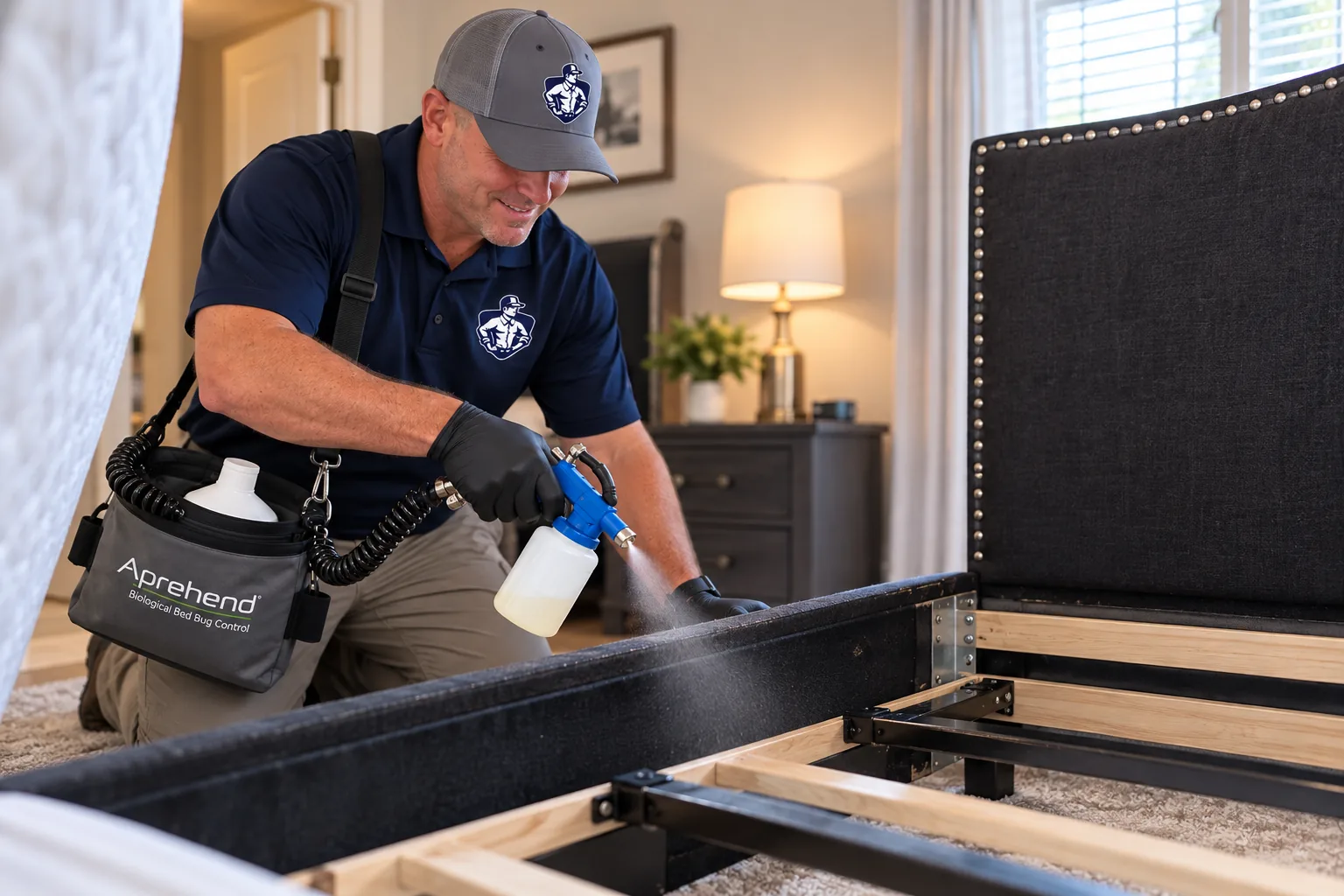
Our team handles bed bug control for homes and rentals across Richmond, Henrico, Chesterfield and the Charlottesville area. Most jobs start with an inspection so we know which rooms are active, then we choose between heat and Aprehend based on what we find. Every treatment is backed by a six-month warranty.
Frequently Asked Questions
Can you get rid of bed bugs without throwing everything away?
Yes. Most infestations are handled by treating, isolating, laundering, vacuuming, encasing and monitoring. Throwing items out too early often creates more mess than progress.
How long does bed bug control usually take?
It often takes several weeks of treatment and follow-up, not one day. Even after activity drops, monitoring should continue for about a month to make sure hidden bugs are gone.
Do bed bugs stay only in the bed?
No. Beds are common, but bed bugs also hide in couches, baseboards, headboards, nightstands, wall cracks and nearby clutter. The closer a spot is to where you rest, the more carefully it should be checked.
Is a professional heat treatment better than sprays?
For many infestations, heat is one of the strongest tools because it can kill bed bugs at all life stages without relying on chemical susceptibility. But it still works best as part of a larger plan that includes inspection and monitoring.
Can bed bugs come back after treatment?
Yes, especially if eggs hatch later, hidden bugs were missed or a new introduction happens through travel, used furniture or shared walls. That is why ongoing monitoring matters so much.